
You notice warm switch plates, lights that dip when the microwave starts, or a home inspector’s note about cloth-covered wires in the attic. In older Tampa Bay houses, that often points to knob and tube. Local electricians at Key West Lights and Electric still find K&T in attics, crawl spaces, and plaster walls from St. Petersburg through Pinellas County. The system once met the needs of a few lamps and a radio. Today it struggles with air conditioning, kitchen loads, and the questions insurers ask before they will write or renew a policy.
What knob and tube wiring actually is
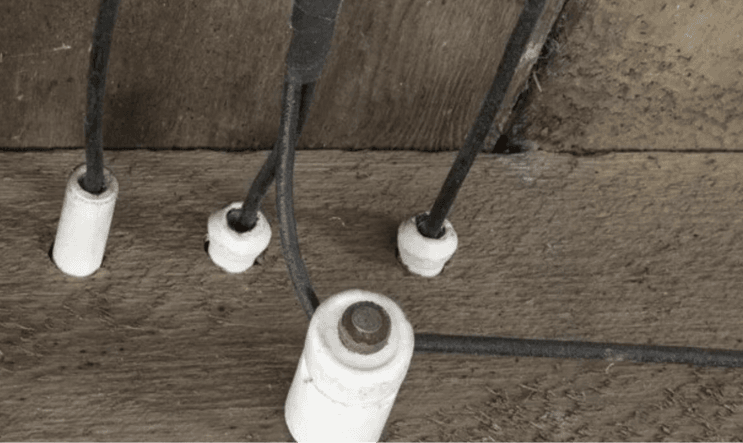
Knob and tube was a common way to wire American houses from the late nineteenth century into the early decades of the twentieth. Two single conductors run apart from each other. Ceramic knobs hold the wires off wood framing. Ceramic tubes protect the conductors where they pass through joists or studs. There is no outer cable jacket and no equipment grounding conductor.
That open-air layout was intentional. Heat could leave the copper. Modern attics packed with blown-in insulation trap that heat. The original cloth and rubber covering also dries, cracks, and flakes. Florida heat and humidity speed that aging. Salt air near the coast and damp crawl spaces add more stress.
A licensed electrician can tell you whether those old runs are still energized. Homeowners should not open walls, twist wires together, or assume a dusty line in the attic is abandoned.
Why knob and tube wiring hazards matter now
The phrase knob and tube wiring hazards covers more than “old wire.” Several problems stack on top of one another in a house that now runs air conditioning, laundry, home offices, and a full kitchen.
No equipment ground
A metal appliance case can stay live if a hot conductor comes loose inside. Two-prong receptacles were normal when this system was installed. They are a poor match for today’s tools, computers, and kitchen equipment. Adapters and three-prong replacements that are not part of a proper grounded system do not fix that gap.
Brittle insulation and hidden nicks
Cracked cloth can expose copper. Vibration, pests, and decades of attic heat make that worse. Later renovations add another threat. Nails, screws, and picture hangers can pierce a conductor buried in plaster. Those injuries are easy to miss until a circuit arcs or a device feels hot.
Overload on circuits never meant for modern life
A run that once fed a few bulbs may now share a space heater, a window unit, and a charging station. Knob and tube was never designed for that lifestyle. Overheating is more likely when the wire is covered, bundled, or asked to carry more current than the original layout allowed.
Undocumented add-ons
Someone may have tied newer cable into old conductors during a kitchen update or a porch conversion. Those junctions are often undocumented. They may sit in a wall cavity without a proper box. Mixed old home wiring is one of the most common findings in bungalows and mid-century houses around Tampa Bay.
Moisture, storms, and insulation
Pinellas County homes take humidity, occasional flooding, and wind-driven rain. Moisture plus damaged insulation is a poor mix. Energy upgrades that bury knob and tube under a thick blanket of insulation also work against the original open-air design. If you plan attic work, have a licensed electrician check what is under the joists first.
If a circuit smells hot, trips often, or scorches a plate, stop using that circuit and call a licensed electrician. Do not try to “test” the wire yourself.
Insurance and old home wiring
For many owners, insurance is the first time the term appears in writing. Carriers underwrite fire risk. Many will not issue a new homeowners policy if knob and tube is still in use. Others may renew an existing policy but exclude electrical damage, raise the premium, or require a licensed inspection and a written plan to replace the system.
A buyer’s inspector in St. Petersburg, Gulfport, or Tampa commonly flags K&T. The sale then depends on whether the seller will rewire, whether the buyer’s insurer will bind coverage, and how much of the dwelling still runs on the old conductors. Lenders can stall as well when the insurance binder never arrives.
Partial updates can leave you in a gray zone. An underwriter may still treat the house as a knob-and-tube property if any active K&T remains. Photos of a new panel do not prove the branch circuits are modern. Fresh paint and new devices can hide cloth wire in the walls.
Ask your agent what the carrier requires, and get that answer in writing. Then have a licensed electrician document what is actually in the attic, crawl space, and walls. Do not assume a cosmetic remodel or a few new outlets solved the insurance problem.
Why partial replacement is risky
It is tempting to rewire the kitchen and leave the bedrooms alone. That approach creates several problems that a tidy-looking room will not show.
Mixed systems. New grounded cable tied to ungrounded knob and tube can leave devices that look current but have no real ground path. A three-prong receptacle on an old run can give a false sense of safety.
Unknown remaining load. Old conductors may still feed hallway lights, an attic fan, a garage, or a single receptacle behind a dresser. Those runs stay a fire and shock concern even after the “important” rooms are updated.
Hidden splices. Connecting new work to old work often happens in attics or wall cavities. Poor splices are a classic failure point. They are also hard for a future buyer’s inspector to accept.
False confidence. New receptacles and a neat panel can hide the fact that cloth wire still feeds half the house. Family members keep plugging in space heaters and window units as if the hazard is gone.
Insurance and resale. Many carriers and buyers want the hazardous system removed, not reduced. A partial job can cost real money and still fail an underwriting review.
Modern protection is not a patch. Devices such as GFCI and AFCI are designed around today’s cable methods and grounding. Adding them onto leftover K&T is not a substitute for proper rewiring by a licensed electrician.
A licensed electrician should map the whole house, not just the room you plan to remodel. Full replacement is a project. It is also the path that actually removes the hazard instead of relocating it. Do not attempt knob-and-tube replacement, panel work, or service changes yourself.
A simple checklist for older Tampa Bay homes
Use this as a conversation starter with a licensed electrician, not as a do-it-yourself diagnosis or repair list.
- Ceramic knobs, tubes, or cloth-wrapped single wires visible in the attic or crawl space
- Two-prong receptacles still in daily use, or three-prong devices that were never part of a grounded system
- Lights that dim when a large appliance starts
- Warm switch plates, buzzing devices, or a hot-cloth or burning smell
- Attic insulation covering old open-air runs
- A home inspection report or insurance letter that mentions knob and tube
- A planned kitchen, addition, or HVAC upgrade that will add load
- A sale, refinance, or new policy that requires documentation of the wiring method
If several items apply, schedule a licensed inspection before you add load or bury the attic in more insulation.
What a licensed inspection involves
A careful visit usually includes the attic, the crawl space if there is one, and the service equipment. The electrician looks for ceramic hardware, cloth insulation, two-prong devices, and later splices. They note whether insulation covers the old runs. They compare how many circuits you actually have with what a modern household in this climate needs, especially if you run central air.
They should explain findings in plain language: which areas are still on K&T, whether any of it appears abandoned, and what a full rewiring project would mean for your floor plan. Plaster walls, historic trim, tile baths, and an occupied house all affect access. That is planning, not a weekend project.
Do not hire an unlicensed handyman to “just add a ground.” Do not bury suspect wire under new insulation. Do not keep using a circuit that smells like hot cloth or plastic. Those choices can turn a known problem into a hidden one.
Living in the house until work is scheduled
Once you know knob and tube is present, treat the system as limited. Avoid space heaters, portable AC units, and other high-draw devices on old circuits. Spread laundry and cooking so you are not stacking large loads at once. Make sure smoke alarms work on every level. If you smell burning or see scorch marks, leave the area and get licensed help.
Hold off on attic insulation, solar, an EV charger, or a major kitchen package until a licensed electrician has said the branch circuits can support the plan. In older Florida homes, the wiring is often the constraint, not the wish list.
Planning professional rewiring
Rewiring an older home is invasive. Expect dust, access openings, and time for plaster or paint repair. A licensed electrician sequences the work so parts of the house can stay usable when the layout allows. They pull permits as required. St. Petersburg, other Pinellas municipalities, and Tampa each have their own inspection process.
Ask how they will confirm every old run is out of service when the job is done. Ask how grounding, new devices, and capacity for future air conditioning or kitchen loads will be handled. Ask whether your insurer needs a letter or photos after final inspection. Get those answers before walls open. Stay away from any plan that leaves live knob and tube in place unless a licensed electrician and your carrier both agree that a specific abandoned section is truly disconnected—and even then, treat leftover wire as a topic for the professional, not a homeowner project.
Historic character and safety can coexist. The goal is a house that still looks like a Tampa Bay original and no longer depends on a wiring method built for a different century.
If you live in St. Petersburg, Pinellas County, or the greater Tampa Bay area and you suspect knob and tube, schedule a licensed inspection. Key West Lights and Electric can review what is in the attic and walls, explain the findings, and provide an estimate for proper rewiring. Call (727) 776-0718 or visit https://keywestlights.com/.