
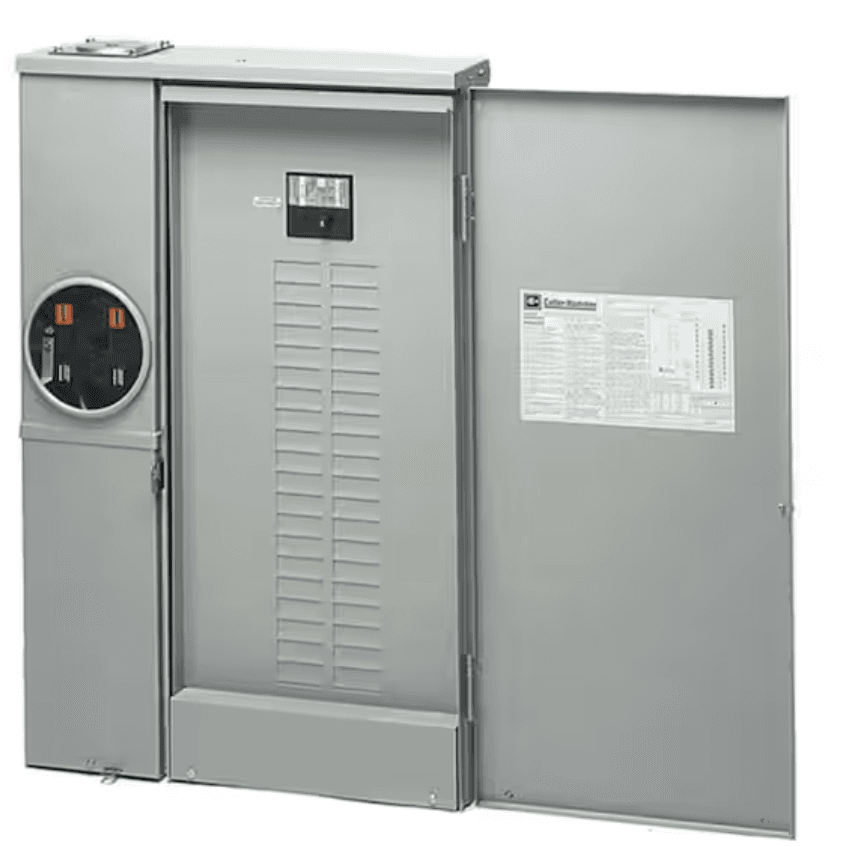
Your breakers trip when the air conditioner and the dryer run at the same time. Lights dip when the microwave starts. You want an EV charger in the driveway, but the old breaker box is already full. These problems show up in St. Petersburg homes and in busy Pinellas County shops and offices. Load has grown, and the panel has not. An electrical panel upgrade is often the right next step, and it is a core service of Key West Lights and Electric.
The panel is the heart of the electrical system. It takes power from the utility and splits it among branch circuits. When that equipment is too small, too old, or packed full, daily use becomes a hassle. In some cases it also becomes a safety concern. This article explains when an upgrade makes sense, how load growth from EVs and HVAC drives the decision, and why a licensed electrician should handle panel and service work.
Signs your home or building is outgrowing the panel
You do not need an electrical license to notice strain. You do need a licensed electrician to confirm the cause and to change the panel. Do not remove the cover, move breakers, or add tandem devices on your own.
Breakers that trip often are the most familiar warning. A single trip after a storm is not the same as repeated trips on the same circuit, or trips whenever two large appliances start together. That pattern often means the panel or the circuit cannot keep up with real use.
Lights that flicker or dim when motors start are another clue. Air conditioners, walk-in coolers, well pumps, and commercial refrigeration compressors draw a surge of current at startup. If the lights dip every time a compressor kicks on, the system may be near its limit.
A full breaker box matters as soon as you need a new circuit. Heat pumps, kitchen remodels, shop tools, medical equipment, and EV charging all need space and capacity. Crowded wiring and makeshift extra breakers are red flags, not clever workarounds.
Heat, humming, rust, or discoloration at the panel is not normal. A burning smell or scorch marks is urgent. Keep people away from the equipment and call a licensed electrician. Do not spray cleaners into live gear or try to snug lugs yourself.
Fuse boxes and very old breaker brands can also mean the equipment is past a practical service life. Parts may be hard to find, and the layout may not match how you use the building today. An upgrade brings capacity and protection in line with current needs and with what the local building department will accept.
Load growth: EVs, HVAC, and everything else you add
Florida homes and businesses use more electricity than they did when many panels were installed. That gap is load growth. It is one of the most common reasons owners ask about an electrical panel upgrade.
HVAC is a large part of the story. Many older houses in St. Petersburg and the rest of Pinellas County began with window units or a modest central system. A high-capacity heat pump, a second zone, or a mini-split for a closed-in porch can add a heavy, long-running load. Commercial spaces add rooftop units, exhaust fans, and refrigeration. Those motors need dedicated circuits and spare capacity at the panel, not a hope that the old main breaker will hold.
Electric vehicles are the other major change. A Level 2 charger is a large load that can run for hours. It is not like a toaster that cycles off. Overnight charging often overlaps with evening cooling, cooking, and laundry. If the panel is already near capacity, a charger can push it over the edge. A licensed electrician should calculate available capacity before anyone orders wall equipment or promises a charge time to a tenant.
Other loads add up quickly. Tankless or heat-pump water heaters, induction ranges, extra kitchen circuits, pool pumps, spa heaters, home offices, servers, point-of-sale systems, and workshop tools each look reasonable alone. Together they can exceed what a 60 amp or 100 amp panel was built to serve. A load calculation, not a guess from a catalog, should drive the decision.
Panel upgrade vs. service upgrade, and the 200 amp question
People often use these terms as if they mean the same thing. They do not, and the difference affects cost, downtime, and utility involvement.
An electrical panel upgrade usually means replacing the breaker box and the breakers inside it. The new panel may offer more spaces, a cleaner layout, and room for future circuits. It may also replace obsolete or damaged equipment that no longer belongs in service.
A service upgrade is broader. It can include the service entrance conductors, the meter arrangement required by the utility, grounding and bonding, and the panel. The utility and the local inspector both have a say. Only a licensed electrician should plan and perform this work. Owners and facility staff should not open the panel, pull the meter, or touch service conductors.
Many homes and small commercial suites now consider 200 amp service when they upgrade. A 200 amp system gives more headroom for HVAC, cooking, and EV charging than a typical 100 amp setup. It is not automatic for every property. The right size depends on a load calculation, how the building is used, and what the utility can provide at that location. Some properties need more than 200 amp. Some can remain at a lower rating if loads stay modest and well managed.
Do not assume a faded label on the old enclosure tells the whole story. Corrosion, damaged bus bars, or a panel type that is no longer a practical choice can all change the plan. Aluminum service or branch wiring and knob-and-tube, when they appear in older Tampa Bay buildings, also require a licensed electrician. Those conditions are not DIY projects, and this article will not walk through repair or replacement steps.
Older Florida buildings and busy commercial spaces
Much of the housing around Tampa Bay dates from decades when electrical demand was lower. A panel that once served lights, a range, and a window unit may now be asked to run central HVAC, a home office, and charging in the garage. Age alone is not a verdict, but age plus new loads is a reason to inspect.
Salt air, humidity, and storms matter here. Meter cans, outdoor disconnects, and panels on exterior walls can corrode. Moisture inside a breaker box is a reason to schedule a licensed electrician, not a reason to take the cover off after a rain.
Commercial spaces follow a different pattern. A restaurant build-out, a salon with many dryers, a clinic with imaging equipment, or a small warehouse with cart charging can outgrow a panel that was fine for a prior tenant. Landlords and facility managers should treat a tenant improvement as a chance to review electrical capacity. Promising equipment in a lease before anyone checks the service is a common and expensive mistake.
If you manage more than one suite, a full panel in one unit can also affect shared service equipment. Involve a licensed electrician early, before drawings and equipment orders lock in loads the building cannot support.
What a licensed electrician evaluates
A useful visit is methodical. It is not a parts catalog. The electrician looks at how you use the building and at the hardware on the wall.
They typically review the main breaker rating, spare spaces, signs of heat or corrosion, grounding and bonding, and whether the panel type is still a reasonable choice. They ask about planned work: EV charging, a new HVAC system, a kitchen or medical remodel, or new commercial equipment. From that conversation they perform or refine a load calculation. That math compares expected loads with the service size. It is the basis for recommending a panel-only change or a full service upgrade, including a move to 200 amp when that is the right fit.
Permits and inspections are part of the process in Pinellas County and nearby cities. A licensed electrician pulls the permit, coordinates with the utility when a service upgrade is involved, and meets the inspector. Skipping that path can create problems at sale time and with insurance. None of this is a weekend project. Panel interiors and service equipment can cause serious injury.
If you want that inspection from a local contractor that treats panel work as everyday core work rather than an afterthought, Key West Lights and Electric serves St. Petersburg, Pinellas County, and the Tampa Bay area. The aim is a clear recommendation, not a rushed swap.
Checklist: is it time to schedule an inspection?
Use this list as a conversation starter with a licensed electrician, not as a do-it-yourself diagnosis.
- Breakers trip when HVAC and another large appliance run together.
- Lights dim when motors or compressors start.
- The breaker box has no spare spaces for a new circuit.
- You plan to add EV charging, a heat pump, or major kitchen, shop, or medical equipment.
- The panel is warm, discolored, noisy, or shows rust.
- The home or suite still has a 60 amp or 100 amp main and growing loads.
- You are preparing a property for sale, a remodel, or a new tenant.
- You smell burning or see scorch marks near the panel (treat this as urgent).
If several items apply, an electrical panel upgrade may be in your near future. If a safety item applies, call promptly. Do not remove the panel cover, tighten connections, or reset breakers that trip again and again without a professional looking at the cause.
After you decide to upgrade
Once you approve a scope, the electrician schedules around permits and, if needed, a utility outage. Plan for a power interruption. How long it lasts depends on whether the job is a panel change or a full service upgrade. Ask for that timeline before the crew arrives so tenants, refrigeration, and medical devices can be protected.
After the new equipment is in, the inspector reviews the work. The utility reconnects service if they had to be involved. Keep records of the panel type, main size, and new circuits with the property file. That packet helps the next HVAC or EV installer and helps at resale.
Future-proofing is worth a short talk. Extra spaces in the new breaker box are easier to include during an upgrade than later. Clear landing spots for HVAC and charging circuits also reduce clutter. Your electrician can explain those options without turning the visit into a hard sell.
Schedule an inspection in the Tampa Bay area
If the panel feels like the weak link, start with an inspection, not with a shopping list of parts. A licensed electrician can confirm whether you need an electrical panel upgrade, a service upgrade, more room in the breaker box, a path toward 200 amp capacity, or a simpler circuit change.
Key West Lights and Electric can inspect your equipment, talk through load growth from HVAC and EV charging, and provide an estimate for the work that is actually needed. Call (727) 776-0718 or visit https://keywestlights.com/ to schedule a visit in St. Petersburg, Pinellas County, or the greater Tampa Bay area.